2025-08-15 — By Siddharth Jain · 8 min read
🇮🇳 Famous Patriotic Lines of India – History, Meaning & Origins
भारत के प्रसिद्ध देशभक्ति नारे और उनका इतिहास
India’s freedom struggle was not just a political movement—it was also a battle of words, music, and emotions. Many iconic lines and slogans inspired millions to join the cause. Let’s explore their origins, meanings, and the history behind India’s symbols.
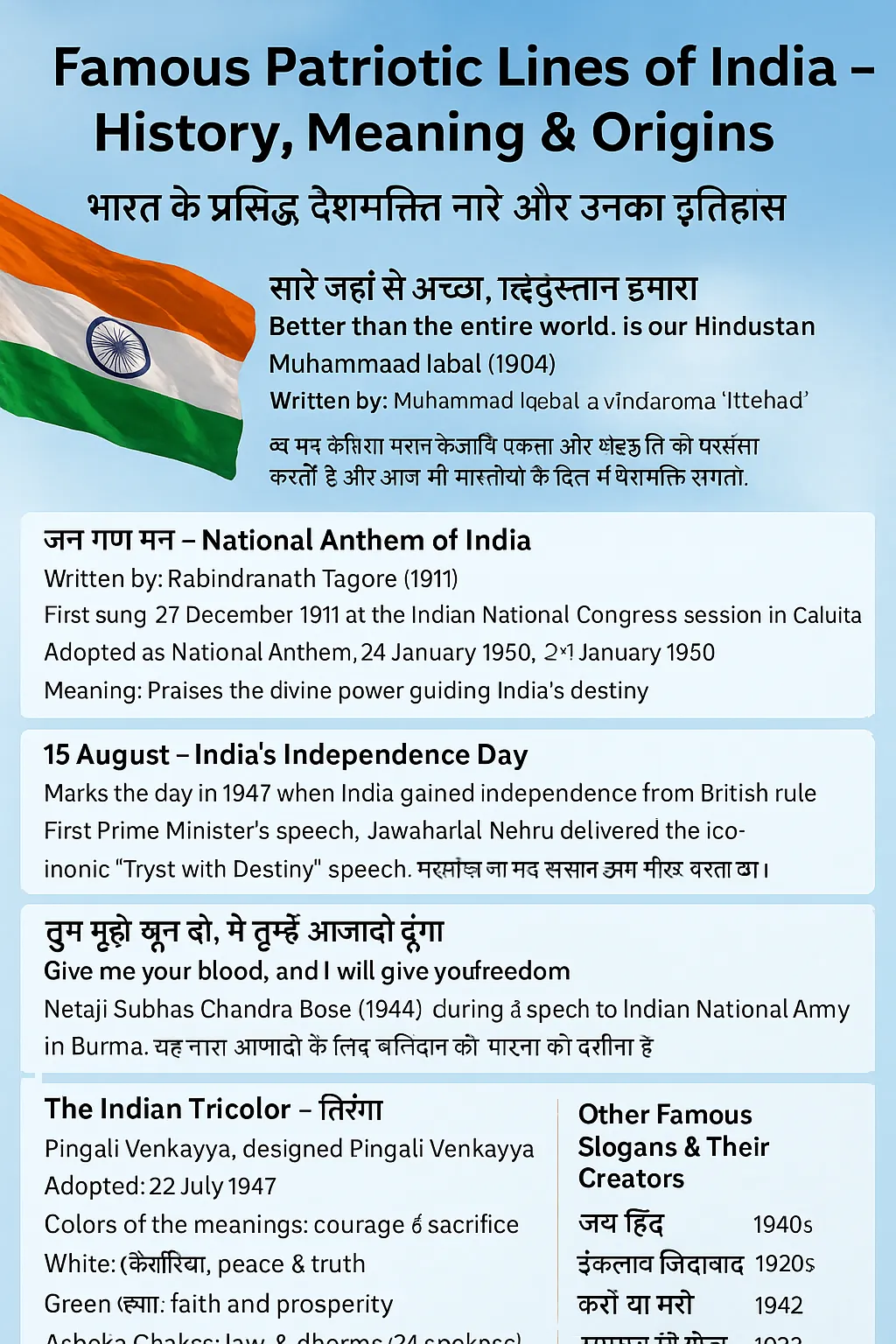
1️⃣ "सारे जहाँ से अच्छा, हिंदुस्तां हमारा"
English Meaning: Better than the entire world, is our Hindustan. Written by: Muhammad Iqbal (1904) Context: Originally published in the weekly journal Ittehad, this poem was a celebration of India’s beauty, culture, and unity—long before partition politics emerged. Hindi Insight: यह कविता भारत की एकता और संस्कृति की प्रशंसा करती है और आज भी भारतीयों के दिल में देशभक्ति जगाती है।
2️⃣ "जन गण मन" – National Anthem of India
Written by: Rabindranath Tagore (1911) First Sung: 27 December 1911 at the Indian National Congress session in Calcutta. Adopted as National Anthem: 24 January 1950 Meaning: Praises the divine power guiding India’s destiny. Hindi Insight: यह गीत भारत के सभी राज्यों और संस्कृतियों की एकता का प्रतीक है।
3️⃣ 15 August – India’s Independence Day
Why Celebrated: Marks the day in 1947 when India gained independence from British rule. First Prime Minister’s Speech: Jawaharlal Nehru delivered the iconic "Tryst with Destiny" speech. Hindi Insight: यह दिन भारत के स्वराज और स्वतंत्रता संग्राम के बलिदानों को याद करने का अवसर है।
4️⃣ "तुम मुझे खून दो, मैं तुम्हें आज़ादी दूंगा"
English Meaning: Give me your blood, and I will give you freedom. Said by: Netaji Subhas Chandra Bose (1944) during a speech to the Indian National Army in Burma. Hindi Insight: यह नारा आज़ादी के लिए बलिदान की भावना को दर्शाता है।
5️⃣ "वंदे मातरम्"
Written by: Bankim Chandra Chattopadhyay (1870s) in his novel Anandamath. Meaning: I praise thee, Mother (India). Status: Declared the national song of India. Hindi Insight: यह गीत भारत माता को समर्पित है और स्वतंत्रता सेनानियों के लिए प्रेरणा का स्रोत था।
6️⃣ The Indian Tricolor – तिरंगा
Designed by: Pingali Venkayya (1921) Adopted: 22 July 1947 Colors & Meaning:
- Saffron (केसरिया): Courage & sacrifice
- White (सफेद): Peace & truth
- Green (हरा): Faith & prosperity
- Ashoka Chakra: Law & dharma (24 spokes) Hindi Insight: तिरंगा भारतीय पहचान और गर्व का प्रतीक है।
7️⃣ Other Famous Slogans & Their Creators
| Slogan | Year | Creator | Meaning |
|---|---|---|---|
| "जय हिंद" | 1940s | Netaji Subhas Chandra Bose | Victory to India |
| "इंकलाब ज़िंदाबाद" | 1920s | Maulana Hasrat Mohani | Long live the revolution |
| "करो या मरो" | 1942 | Mahatma Gandhi | Do or die for freedom |
| "साइमन गो बैक" | 1928 | Indian Protesters | Demand for British commission to leave |
| "स्वराज मेरा जन्मसिद्ध अधिकार है" | 1916 | Bal Gangadhar Tilak | Freedom is my birthright |
📜 Conclusion
India’s journey to independence was fueled by courage, unity, and the power of words. These slogans and songs still resonate today, reminding us that freedom is both a right and a responsibility.
